.svg)
.svg)
.svg)


%202.svg)
The Commercial Flat Roofing Field Guide: Comparing EPDM, TPO, and PVC
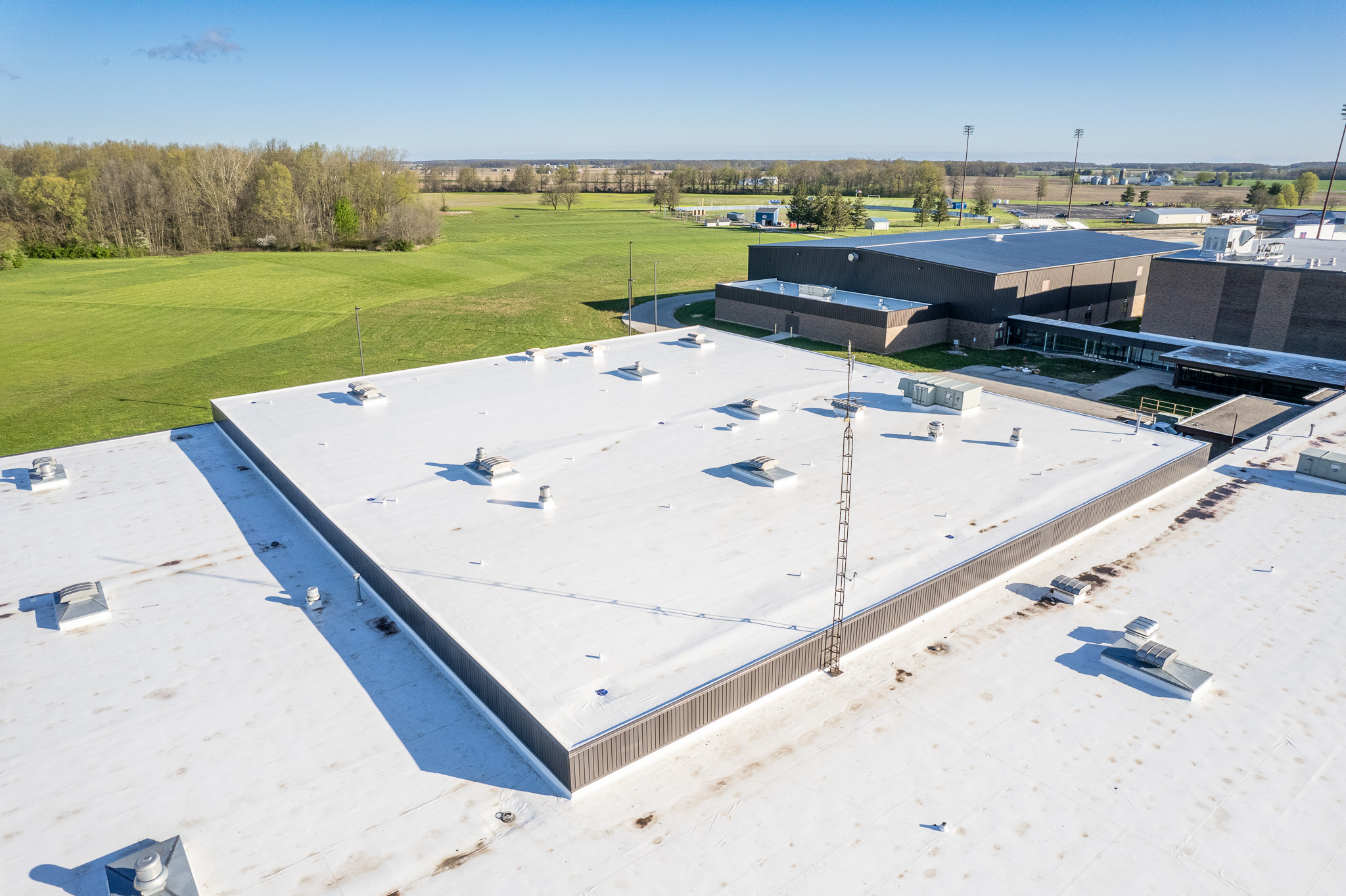
When evaluating roofing bids for your facility, you’re up against a weighty decision, with a lot of financial responsibility at stake. Whether it’s for a school, a warehouse, or a retail center, there’s a lot to have to understand about what goes into a flat roofing system, and the choice of material is only half the decision. Beyond that, you’re also choosing a specific installation method and a long-term maintenance profile.
Unlike a sloped roof that relies on gravity and overlapping shingles to shed water, a commercial flat roof is an engineered, sealed system. Because low-slope roofs lack the natural drainage of a pitch, they must contend with unique physical stresses: ponding water, intense UV degradation, and the constant expansion and contraction of the building structure itself.
This guide provides a technical breakdown of the three most common systems used on facilities across the United States, so that you can make a more informed decision when choosing your next roofing contractor.
EPDM: The Synthetic Rubber Standard
Commonly referred to as "rubber roofing," EPDM (Ethylene Propylene Diene Monomer) is a synthetic rubber membrane that has been an industry staple for decades. It is primarily available in black, though white options exist at a higher price point for those seeking better reflectivity.
EPDM Installation and Seam Integration
EPDM is usually fully adhered to the roof deck with cold-applied adhesives or ballasted with stone. Because the material is a thermoset, meaning its chemical structure is permanent once manufactured, it cannot be melted and reshaped. This means the seams cannot be welded together to form a single, monolithic sheet. Instead, the installation relies on specialized liquid adhesives or double-sided seam tapes to join the membranes.
Best Use Cases for Rubber Roofing
This material remains a frequent choice for massive industrial footprints or "big box" facilities where the primary driver is the lowest possible upfront material cost. When a project covers hundreds of thousands of square feet, the initial savings of EPDM can be significant compared to thermoplastic systems.
Proactive Maintenance and Seam Longevity
While EPDM is a durable material, the longevity of the system depends on the long-term integrity of those taped or glued seams. In the Midwest, for example, 60-degree temperature swings in a short period of time are common. This constant expansion and contraction of the building puts stress on these adhesive points.
What this means is that, if you plan to get the full 20-year lifespan out of a rubber roof, a proactive maintenance schedule is essential. This includes regular inspections to identify areas where adhesives may be starting to dry or "alligator." Small, timely repairs to these seam sections can prevent minor moisture intrusion from becoming a larger systemic issue.
TPO: The Reflective Choice
TPO (Thermoplastic Polyolefin) is currently one of the fastest-growing segments of the commercial roofing market. It is a single-ply, reflective white membrane that provides excellent energy efficiency by reflecting UV rays away from the building, which can lower cooling costs during the summer months.
The Heat-Welding Process and Seam Integrity
Unlike EPDM, TPO is a thermoplastic material, which means it can be melted and reshaped. During installation, a hot-air welder is used to fuse the seams together. When executed correctly, this creates a physical, monolithic bond that is stronger than the membrane itself. Because the seams are fused rather than glued, they are resilient against the natural expansion and contraction of the building.
The Sensitivity of the "Welding Window"
The long-term performance of a TPO roof is largely determined by the precision of the weld during the initial installation. There is a specific "window" of temperature and speed required to achieve a perfect bond, and these settings must be adjusted as the outdoor temperature or wind speed changes throughout the day. To ensure a successful installation, a contractor must perform "pull tests" on scrap material at regular intervals to verify that the welds are achieving full fusion.
Specifying Wear Layer and UV Resistance
Not all TPO membranes are manufactured to the same standard, and the longevity of the system is often tied to the thickness of the top "wear layer" above the internal reinforcing scrim. This layer is the roof’s primary defense against UV erosion.
When evaluating bids, it is important to look beyond the total thickness of the membrane and ensure the specific wear layer meets the requirements for your facility’s exposure levels. With the right material specifications and a verified installation, TPO offers a reliable, energy-efficient solution for many commercial applications.
PVC and the Case for Prefabrication
PVC (Polyvinyl Chloride) is widely considered the premium tier of single-ply roofing. It is a highly stable material that is naturally resistant to fire, chemicals, and grease, which makes it the gold standard for schools, restaurants, and industrial facilities.
However, the most significant advancement in PVC isn't just the chemistry of the membrane, but the method of installation pioneered by industry leaders like Duro-Last.
The Advantage of Factory-Controlled Prefabrication
Most flat roofs are "built" on your building, which means miles of critical seams are welded by hand in unpredictable conditions. By contrast, a prefabricated PVC system shifts that labor, where up to 85% of the seams are welded in a factory-controlled environment before the material ever reaches the job site.
By moving the complex welding of corners, flashings, and stacks to a precision facility, the "human error" variable is almost entirely removed. When the system arrives, it is custom-measured to fit your specific roof deck, including every protrusion and curb.
Superior Watertight Integrity and Permeability
Flat roofs must often be able to withstand long periods of precipitation and ponding water. PVC is a non-porous, high-density membrane that is virtually impervious to moisture, making it an excellent choice for these climates.
While other systems may rely on adhesives that can eventually degrade when submerged for long periods, a welded PVC system remains watertight even under standing water. This makes it a reliable choice for facilities with complex HVAC footprints or drainage challenges where water tends to linger.
Performance in Extreme Temperature Fluctuations
While some materials can become brittle or lose their elasticity over time, high-quality PVC remains flexible throughout its lifespan. This flexibility is vital for dealing with the thermal expansion and contraction common in some climates.
Because the seams are fused into a single, monolithic sheet, the roof moves as one unit. This eliminates the "tugging" effect that can stress components in systems that rely on mechanical fasteners or glues to hold their seams together.
The NDL Warranty: Your Quality Control Safeguard
In the commercial world, a "lifetime warranty" is often less significant than a No-Dollar-Limit (NDL) Warranty. While many standard warranties are pro-rated (meaning their coverage value drops as the roof ages) an NDL maintains its full protective value for the duration of the agreement.
Understanding the Scope of NDL Protection
An NDL warranty is a comprehensive commitment where the manufacturer covers the total cost of any covered repairs, including both labor and materials, for the life of the term (typically 15 to 30 years). This is a critical fiduciary tool for school boards and facility managers; it effectively "locks in" your repair costs at zero, protecting your future budget from the rising costs of construction and materials.
The Manufacturer Audit as Quality Insurance
The most valuable aspect of an NDL warranty is the third-party oversight it provides. These warranties are only issued after the manufacturer sends their own technical representative to the site to conduct a post-job audit. They walk the roof, pressure-test the seams, and verify that every detail meets their engineering standards. This provides you with an independent, expert verification that the work was done correctly before the project is officially closed out.
Selecting a Responsible Bidder
When the bidding process begins, the price at the bottom of the proposal is just one part of the equation. For public works and large-scale commercial projects, the goal is to identify the "lowest responsive and responsible bidder." Before a contractor is invited to the table, they should meet several non-negotiable professional standards.
Financial Strength and Specialized Expertise
A commercial contractor must have the financial stability to be bonded for the full value of the project. This is a vital safeguard that ensures your project will be completed as specified.
Furthermore, because flat roofing is a distinct trade from residential shingles, it requires specialized tools and safety protocols. Ensuring the crews on your roof are factory-authorized for the specific system being installed is the best way to avoid the risks associated with "generalist" labor.
Safety Records and Manufacturer Status
Last but not least, a contractor’s EMR (Experience Modification Rate) is an objective metric of their safety history. A low EMR indicates a company that prioritizes a safe job site, which is paramount when work is performed on occupied buildings like schools.
Landmark Roofing is a Duro-Last Elite Contractor, a designation earned through a consistent track record of high scores during those manufacturer inspections mentioned above. Whether you are managing a single facility or a full district, our approach is built on providing the technical data and transparency you need to make an informed decision.
Summary: Moving from Bidding to Procurement
Choosing a commercial roof is a 20-year commitment. While the differences between EPDM, TPO, and PVC are technical, they eventually show up as line items in a maintenance budget years down the road.
By prioritizing factory-controlled quality and verified NDL coverage, you remove the guesswork from the procurement process. Our team at Landmark is here to help you navigate these specifications, providing the onsite assessments and technical reports required to ensure your next facility project is a long-term success.
Ready to evaluate your district's facilities? Contact our team today to schedule a complimentary, no-obligation roof assessment. We’ll provide a detailed report on the condition of your assets to help you plan for the upcoming budget cycle.

.avif)


