.svg)
.svg)
.svg)


%202.svg)
Why Duro-Last Is the Flat Roof System We Install on Commercial Buildings
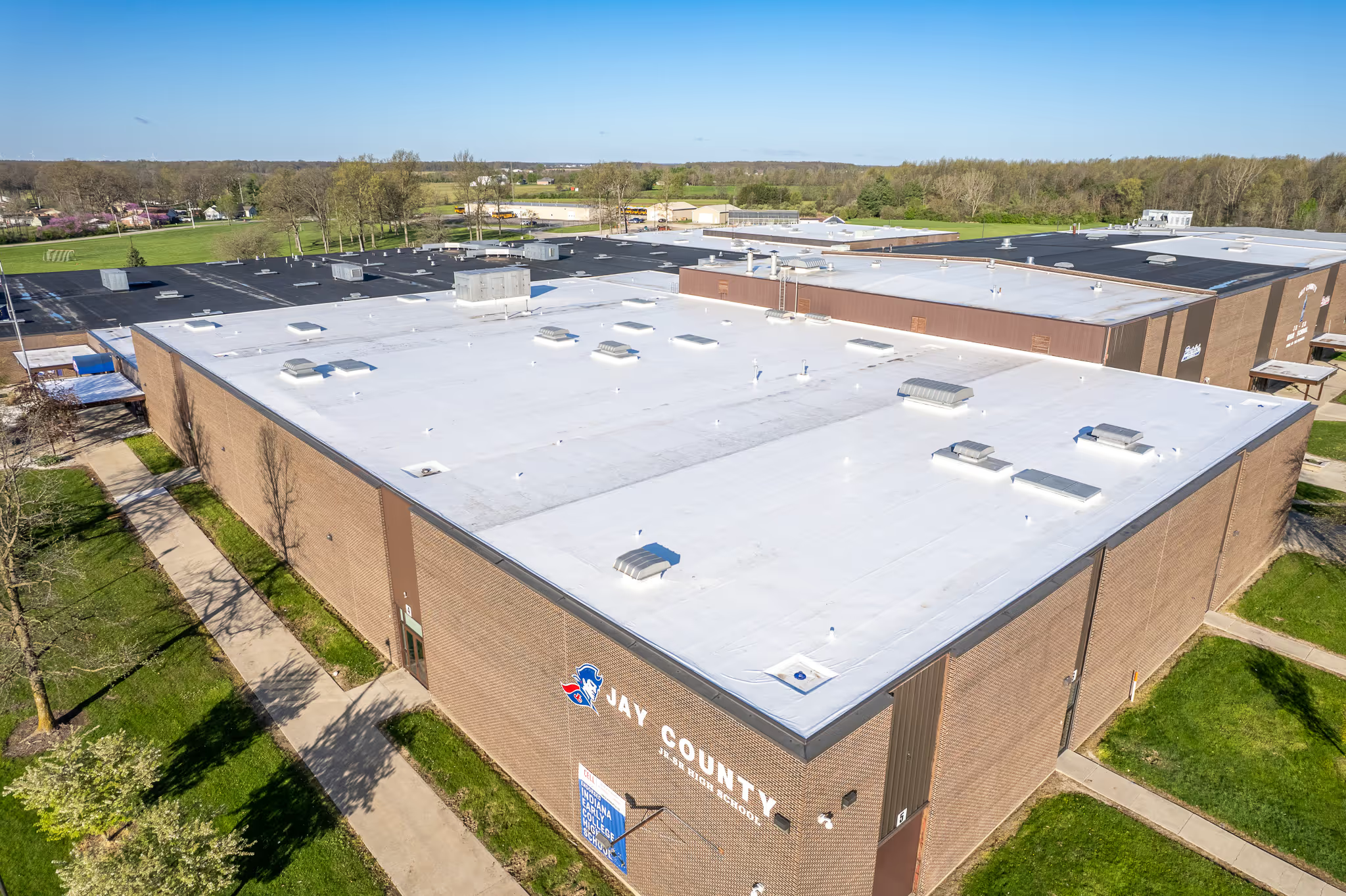
Flat roofs are straightforward until they aren't. A small repair becomes a recurring repair. The same drain backs up everytime. A seam that was patched two years ago is showing up on the problem list again. For a lot of commercial property managers, the flat roof becomes background noise, something you deal with rather than something you solve.
A lot of that pattern comes down to what the roof is made of and how it was installed. If you're managing a building with an aging flat roof, or you're specifying a new system, Duro-Last is worth understanding in detail.
What Makes Flat Roofs Fail
Most flat roof failures trace back to the same two places: seams and penetrations.
Seams are where sections of membrane meet. Penetrations are every point where something passes through the roof HVAC curbs, drains, pipe stacks, skylights. These are the transitions in the system, and they're where water finds its way in. A membrane that's holding fine across the open field of your roof can be leaking at a drain flashing or a seam that was stressed by last winter's freeze-thaw cycling.
This is worth keeping in mind when evaluating any flat roofing system, because not all of them treat seams the same way.
How Duro-Last Handles the Seam Problem
Duro-Last is a custom-fabricated PVC roofing system. Before any material ships to your building, the system is manufactured to the exact dimensions of your roof including drains, penetrations, curb flashings, and edge details. Up to 85% of the seam work is completed in a controlled factory environment before installation begins.
That distinction matters. A seam welded in a climate-controlled factory with consistent equipment is more reliable than one welded on a roof in variable weather, under time pressure, by whoever is available that day. By the time Landmark's crew arrives on your roof, the parts of the system most likely to fail have already been finished under conditions that minimize the chance of failure.
Installation is also faster as a result. Less seam work on the roof means less time your building is under construction, and less disruption to whatever is operating below.
What the Membrane Actually Is
Duro-Last's standard membrane is 50 mil PVC. The top performance layer, the surface exposed to weather, is 28 mil thick. That exceeds a number of competitor products that advertise similar total thickness but concentrate less material on the exposed layer.
The reinforcement scrim is woven at 18 by 14 threads per square inch, which gives the membrane puncture and tear resistance that holds up under foot traffic and rooftop equipment maintenance.
PVC handles the conditions that damage other flat roof materials over time:
- Ponding water, which is a given on most flat roofs, doesn't degrade it
- Grease and chemical runoff from HVAC units and kitchen exhaust doesn't break it down
- It's self-extinguishing after fire exposure
- It moves with the building through freeze-thaw cycles without cracking
That last point is relevant in the Midwest. Temperature swings between January and July routinely exceed 100 degrees, and a membrane that can't flex with the deck will show the stress over time.
Energy Costs
The white PVC surface reflects up to 88% of the sun's energy and carries ENERGY STAR certification. On a dark EPDM or built-up roof, solar heat transfers into the top floor and the cooling system absorbs the difference. A reflective membrane reduces that load at the source.
For a large warehouse, retail building, or any facility running air conditioning through a Midwestern summer, the reduction in cooling demand is a real number over the life of the roof, not a marketing point.
When a Full Tear-Off Isn't Necessary
If your current roof is structurally sound but the membrane has degraded, Duro-Last can often be installed over the existing system. This skips the cost and disruption of a full tear-off.
It's particularly useful for older metal roofs with failing seams or rust around penetrations, a common situation on commercial and industrial buildings that have been around for 20 or 30 years. A Duro-Last retrofit covers the existing surface with the PVC membrane, addressing the seam and fastener problems without taking the building out of service. Depending on the condition of the existing roof and the size of the building, the cost savings compared to a complete replacement can reach 50%.
Getting a Free Roof Assessment
If you manage a commercial property with a flat roof that's older than 15 years, showing signs of ponding that don't clear, or generating a repair history that never fully resolves, a professional inspection is a reasonable first step.
Landmark has offered free inspections for commercial properties for over 10 years. We walk the roof, document what we find, and give you a clear picture of what needs attention and what doesn't so you have something concrete to work from, whether that's a repair plan, a replacement timeline, or confirmation that the roof is in good shape.

.avif)


