.svg)
.svg)
.svg)


%202.svg)
Repair, Maintain, or Replace: How to Decide What Your Roof Actually Needs This Spring
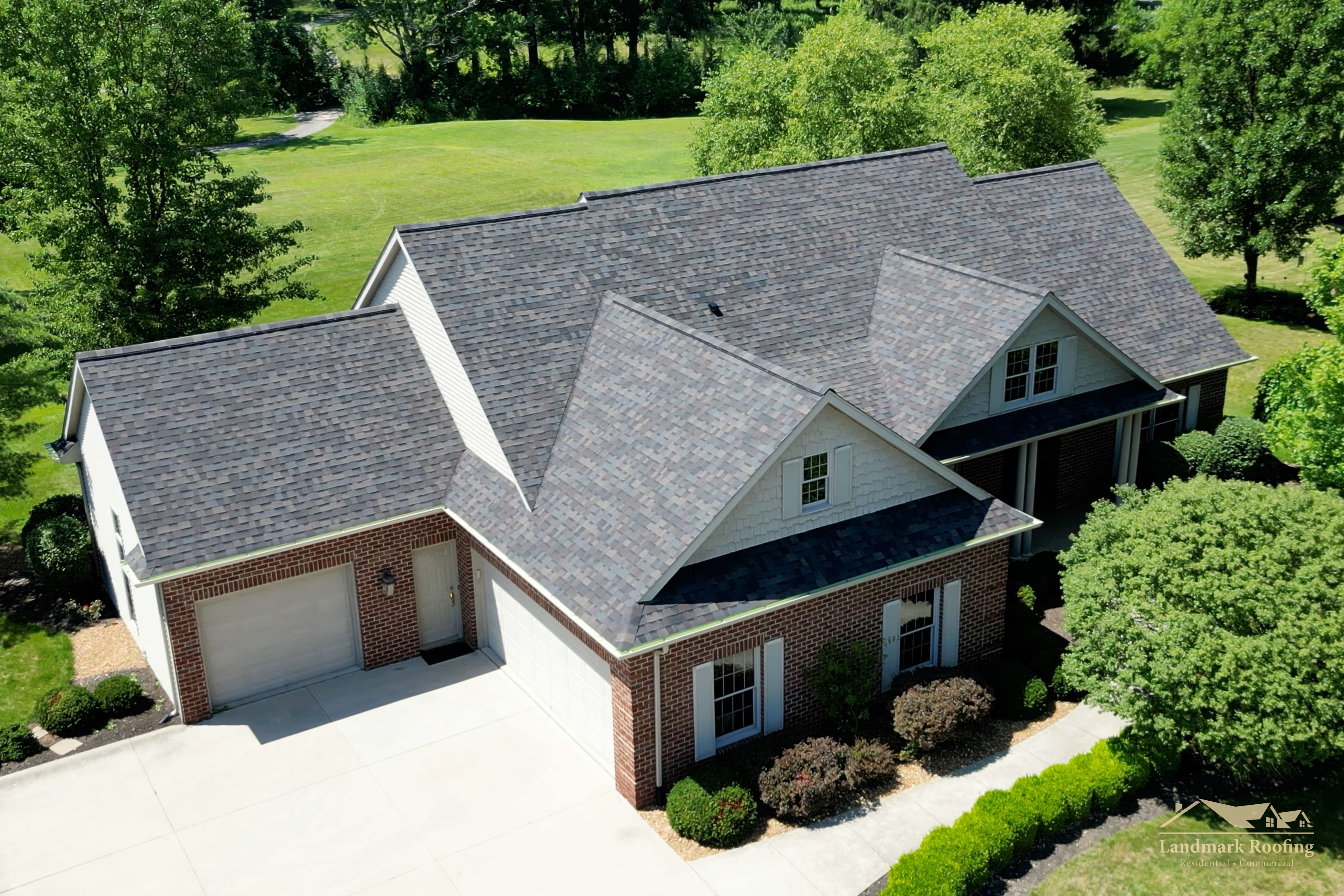
Spring is when most homeowners take a real look at their roofs for the first time since fall. Sometimes what they find is obvious: a missing shingle after a bad storm, water stains on the ceiling that weren't there in October. Other times, the roof looks fine from the driveway but something feels off, or a neighbor just had theirs replaced and now you're wondering.
The honest answer to "what does my roof need?" depends on a few specific factors, not on how old it looks or how much you'd rather not deal with it. This post walks through how to think about that decision.
Start with an Inspection, Not a Quote
The most common mistake homeowners make is calling a roofer and asking for a replacement quote before anyone has actually looked at the roof. That's like calling a mechanic and asking how much a new engine costs before they've run a diagnostic.
A proper inspection, one where someone walks the roof, checks the flashing, looks at the underlayment condition, and gets into the attic to look for water intrusion, gives you real information.
What a good inspection covers:
Shingles. Not just whether any are missing, but whether they're curling at the edges, losing granules at an accelerated rate, or cracking. Granule loss is worth paying attention to: some ends up in the gutters over time, but if you're scooping out significant amounts after a single season, the shingles are aging out.
Flashing. The metal strips around your chimney, vents, and skylights are where most leaks actually start. Freeze-thaw cycles work the sealant loose over time. A shingle that looks fine can be sitting next to a flashing gap that's been letting water in for two years.
Underlayment and decking. This one requires getting into the attic. Soft spots in the decking, staining on the sheathing, or daylight visible through small gaps are all signs that water has been making its way in, often before any interior damage is visible.
Gutters and drainage. Gutters that have pulled away from the fascia, downspouts that don't extend far enough from the foundation, or debris-clogged valleys on the roof surface all affect how water moves off the house. A roof that sheds water properly lasts longer than one that pools it.
The Three Outcomes from Your Roof Inspection
After a real inspection, you're looking at one of three situations.
Your roof is in good shape and needs maintenance
This is actually the best outcome, and more common than people expect. A roof that's 10 to 15 years old with no significant damage and good flashing can last another decade with the right care.
Maintenance means catching the small things before they become expensive: cleaning gutters twice a year, clearing debris from valleys and behind the chimney, resealing nail pops and pipe boots, and getting a professional set of eyes on the flashing every year or two.
Deferred maintenance is how a roof that had 10 good years left ends up needing replacement at year 15 instead of year 25.
Your roof needs repairs
Some damage is localized enough that a targeted repair makes more financial sense than a full replacement. A few cracked shingles around a chimney, a failed boot seal around a vent pipe, or a section of flashing that's lifted. These are fixable without tearing off the whole roof.
The question to ask is whether the repairs address the underlying issue or just patch a symptom. If you're on your third repair in the same area, the problem is probably structural, not isolated. A straight-talking roofer will tell you when you've crossed from "worth repairing" to "spending money on a roof you're going to replace in two years anyway."
One thing worth knowing: most manufacturers' warranties require that any repairs be done by a certified installer. If you're patching a roof that still has coverage, confirm the repair method won't void it.
It's time to replace
Most asphalt shingle roofs last 20 to 30 years, depending on the quality of materials, the installation, and how well they've been maintained. Architectural shingles (the dimensional laminate type that most homes have) typically outperform 3-tab shingles by a significant margin.
Signs that replacement is the right call:
- The roof is past the 20-year mark and showing multiple failure points, not just one
- Repairs keep coming back in the same areas
- The decking has water damage in more than one location
- Shingles are curling or blistering across a large portion of the surface, not just in one section
If replacement is where you're headed, spring is a good time to get it done. Roofing crews run their busiest schedules in late summer and fall, after storm season. Getting on the calendar in March or April usually means shorter lead times and more flexibility on scheduling.
What to Expect After an Inspection
The cost and timeline for each situation are different. Maintenance is a recurring investment, usually a few hundred dollars a year. Repairs depend on what needs fixing and where. A full replacement is the largest number, but it's also the only permanent solution if the roof is genuinely at end of life.
If you haven't had a professional inspection in the last two years, that's the right first step regardless of which situation you're in. It costs nothing and gives you an honest baseline. If replacement is where you end up, financing is available and we walk through the options at the estimate.
Landmark offers free inspections with no pressure and no obligation. If your roof doesn't need anything, we'll tell you that. If it does, we'll show you exactly what we found and walk you through the options. Click here to get started.

.avif)


